Filipiniana Books
THE LOCAL HISTORICAL SOURCES OF NORTHERN MINDANAO
THE LOCAL HISTORICAL SOURCES OF NORTHERN MINDANAO
Couldn't load pickup availability
Amidst the simplicity of life lived by men and women in Northern Mindanao, a contrast of tragic and festive events emerged. This book contains accounts of loyalty and betrayal, of bravery and cowardice, of slavery and freedom, of love and hate, ad of war and peace.
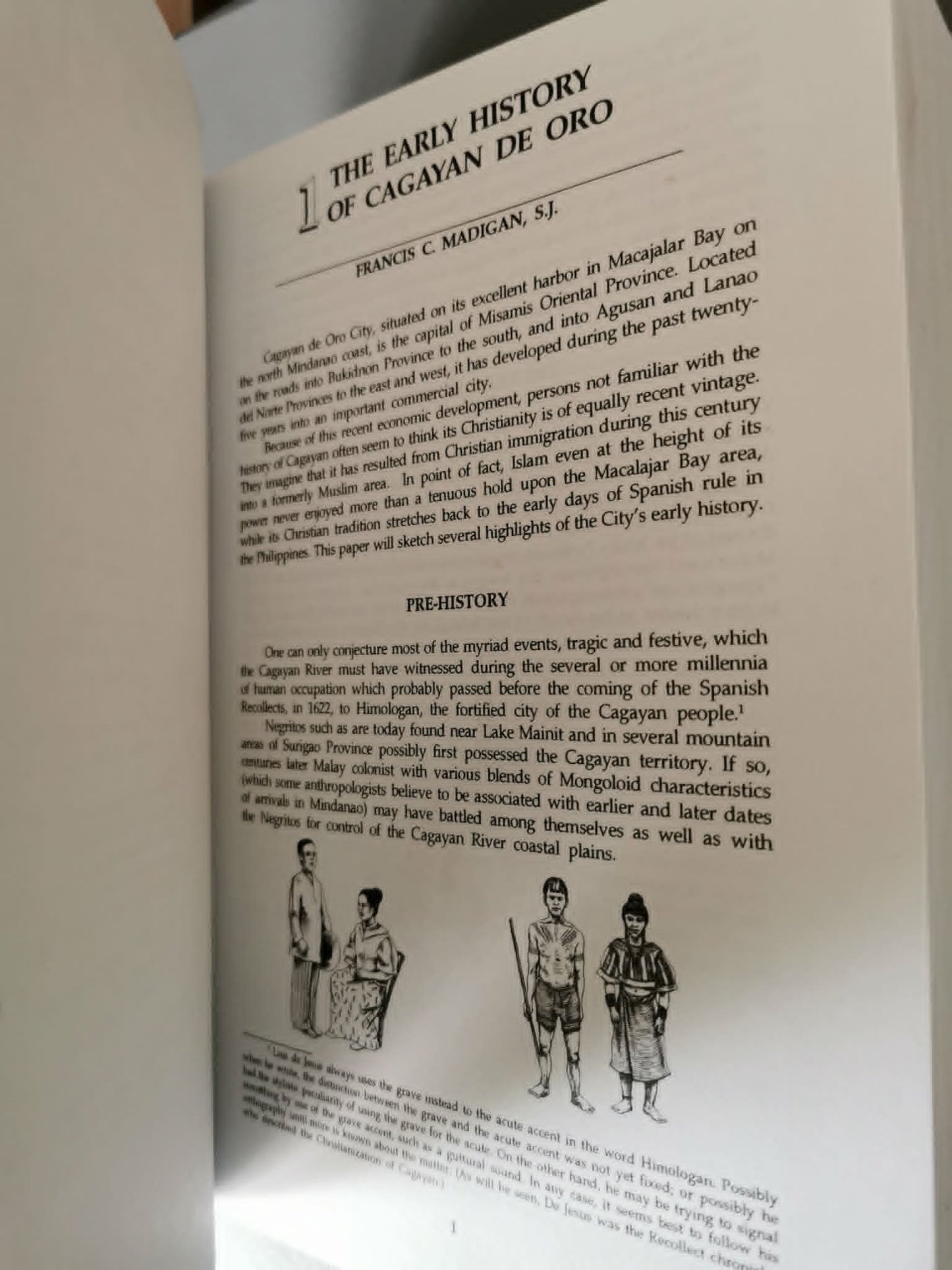
- Pre-Colonial & Archaeological Foundations: Outlines early settlement structures and local legends prior to European contact. It details the transition into a Spanish-governed pueblo starting in 1622 under the Recollect missionaries.
- Ecclesiastical Milestones: Documents the history of Catholicism in the region, tracing the development of the Archdiocese and the history of the Cathedral of San Agustin, which served as the cultural epicenter of colonial Cagayan.
- The Bautista Manuscript: This is arguably the most critical piece of primary source military history in the collection. Written by Filomeno M. Bautista, Sr., it provides a detailed eyewitness record of the Philippine Revolution and armed resistance against American occupation in Misamis Province between 1900 and 1901.
- It outlines tactical movements, civilian experiences under wartime duress, and local patriotic leadership in Northern Mindanao.
- Living on the Edge: Focuses on the unique historical path of Camiguin Island, deeply altered by its volatile geology.
- The Hibok-Hibok / Vulcan Eruptions: Incorporates historic translations, reports, and Aquarelas Pintadas (painted watercolors) from 1872 that chronicle how early volcanic disasters physically upended colonial towns (such as Mambajao) and reshaped local populations.
- Misamis Oriental Communities: Compiles early town records and open letters documenting grassroots social history from municipalities like Balingasag. [1]
- Historical Journalism: Preserves snippets and historical notes from Bantayan, an early weekly newspaper published in Cebuano-Visayan and Spanish, alongside press dispatches stretching from 1887 to 1928.
- Early Accounts & Surveys: Incorporates 19th-century Spanish colonial descriptions from observers like Vicente Elio and José Felipe Del-Pan regarding the geography, rivers (such as Rio Grande de Mindanao), and agricultural output of the island.
- Cultural Anthropology: Explores regional customs, travel anecdotes, and traditional societal structures, including a localized study on historical Philippine marriages.
The first of its kind, this book is a treasure to the people of Mindanao. The wealth of information it provides of Pre-Spanish, Spanish, and post-Spanish Social conditions and cultures of Northern Mindanao is one of its best features. The inclusions of various original unpublished historical materials make it really exceptional and different.
This book is the story of the life of simple men and women of Northern Mindanao. However, the way the story is told makes one realize that their fight for life and survival is far from simple.
Share